
At a Glance:
| Grades: | 3, 4, 5, 6 |
|---|---|
| Subject: | ESL/ELL (English Language Learning) |
| Topic: | Action Verbs |
| Lesson Length: | 30 - 45 mins |
Standards / Framework:
What will students learn in this activity?
Students will practice using action verbs to describe what is happening in the present tense.
What should students know before this activity?
Students should be familiar with common action verbs. This lesson is a great way to reinforce adding ing to the end of a verb to show present tense. Use this as a check for understanding sentence structure and spelling patterns.
How can teachers introduce this lesson?
- Ask students: "What am I doing right now?"
- Have students name the action. "You are ______." Student answers may include talking, standing, looking.
- Explain that action verbs are words which explain an action by someone or something.
What will students do?
-
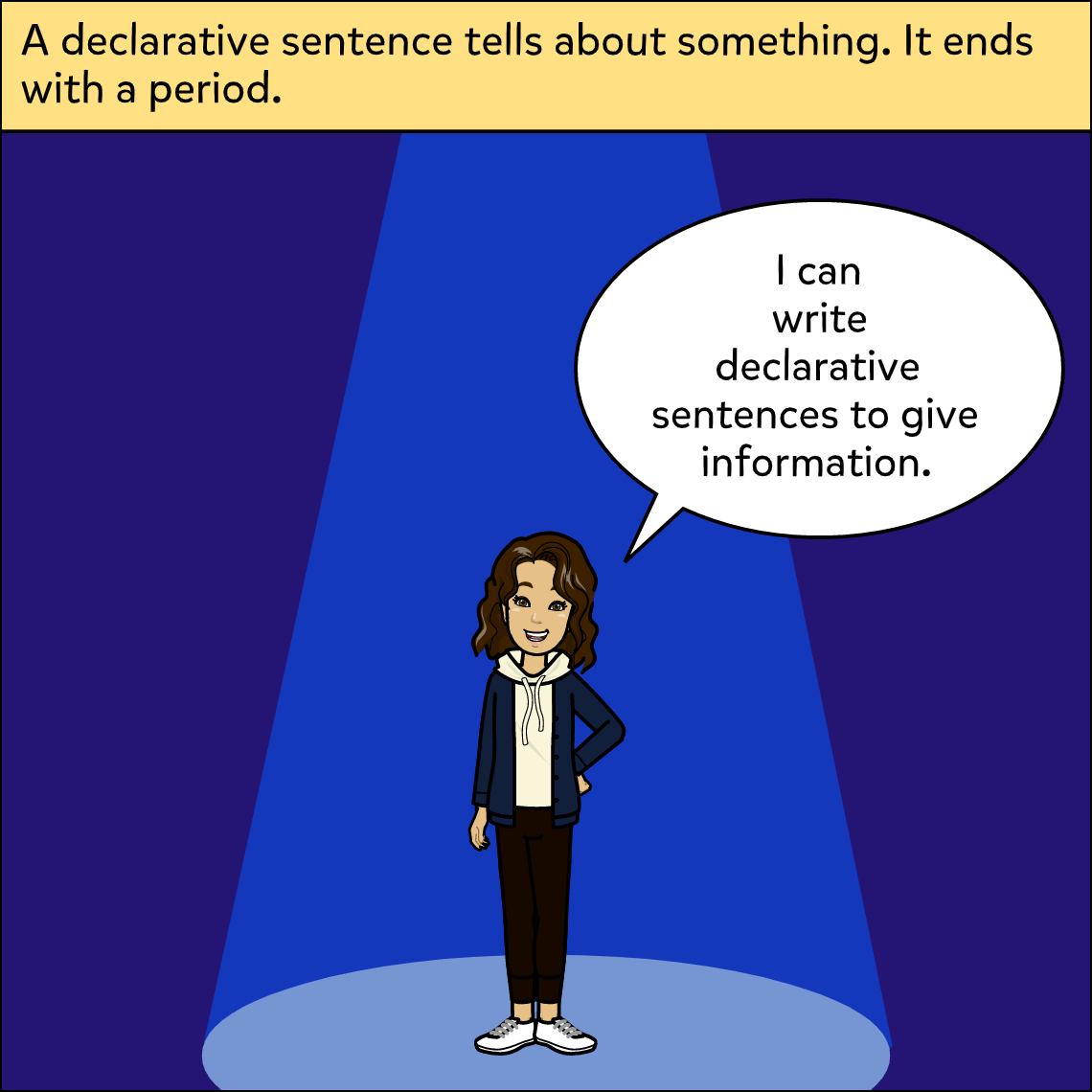
Read and discuss the sample comic. After reading each panel, ask:
-
Which word tells us what the person is doing in the sentence?
-
Which word is the subject, i.e. the person completing the action?
-
-
Guide students to understand that we can add ing on the end of verbs to show they are happening now, in the present.
-
Discuss how each sentence starts with a subject and then the correct form of be. Then we add ing to the end of the verb to show the action.
-
Practice reading aloud or acting out the sentences to promote understanding of the present tense.
-
Have students role play to show what they are doing while the other students identify the action using the correct form of the present-tense verb.
-
Have students create a comic showing their action while using the correct sentence structure.
How can teachers wrap up the lesson?
- Have students share their comic with the group or with a partner.
- Emphasize the importance of conjugating the verb correctly to show present tense.
How can teachers differentiate this activity?
-
Provide sentence stems as needed.
-
Allow students to use the speech-to-text feature.
- Allow students to use the voiceover feature to read their comics aloud.
-
Allow students to work with a peer model.
-
Provide a list of common verbs.
-
Provide visuals for students.
- Utilize student language levels to differentiate for individual students.
 Urban
 Suburban
 Rural
 Sports
 Playground
 Farm