At a Glance:
| Grades: | 6, 7, 8 |
|---|---|
| Subject: | Civics; Social Studies |
| Topic: | Community Roles and Responsibilities |
| Lesson Length: | 45 mins - 1 hour |
Standards / Framework:
What will students learn in this activity?
Students will explain the roles citizens play, such as voters, taxpayers, officeholders, or members of the armed forces, and understand their significance in their community.
What should students know before this activity?
Students should be familiar with important members of their community, as well as their roles and responsibilities.
How can teachers introduce this lesson?
- Ask students:
- "What do you think it means to be a responsible citizen?"
- "Can you name any roles that citizens can play in our society?"
- "Have you ever wondered why these roles are important?"
What will students do?
- Have students anonymously write their answers to the three hook questions on a index card or sticky note. Collect the cards, shuffle them, and read some of the responses aloud to help stimulate engagement and encourage discussion.
- Guide students in playing a game of “Who Am I?” where you will read descriptions of various roles citizens hold in a community and the students will guess which role the description is referring to. Allow a moment for discussion and then reveal the correct role while discussing its significance to the community.
- Have students conduct a Think-Pair-Share in which they will complete a concept map around a chosen community role and the responsibilities and/or obligations attached. As each pair shares the concept map, highlight a few responsibilities from each by writing them on the board.
- As a class, have students identify the top five community responsibilities shared by placing three sticky notes (with their names on them) next to the three responsibilities they believe are most important for a successful community. After every student has had an opportunity, facilitate a class discussion by identifying the top five responsibilities chosen by the class and highlighting the commonalities and differences in their choices.
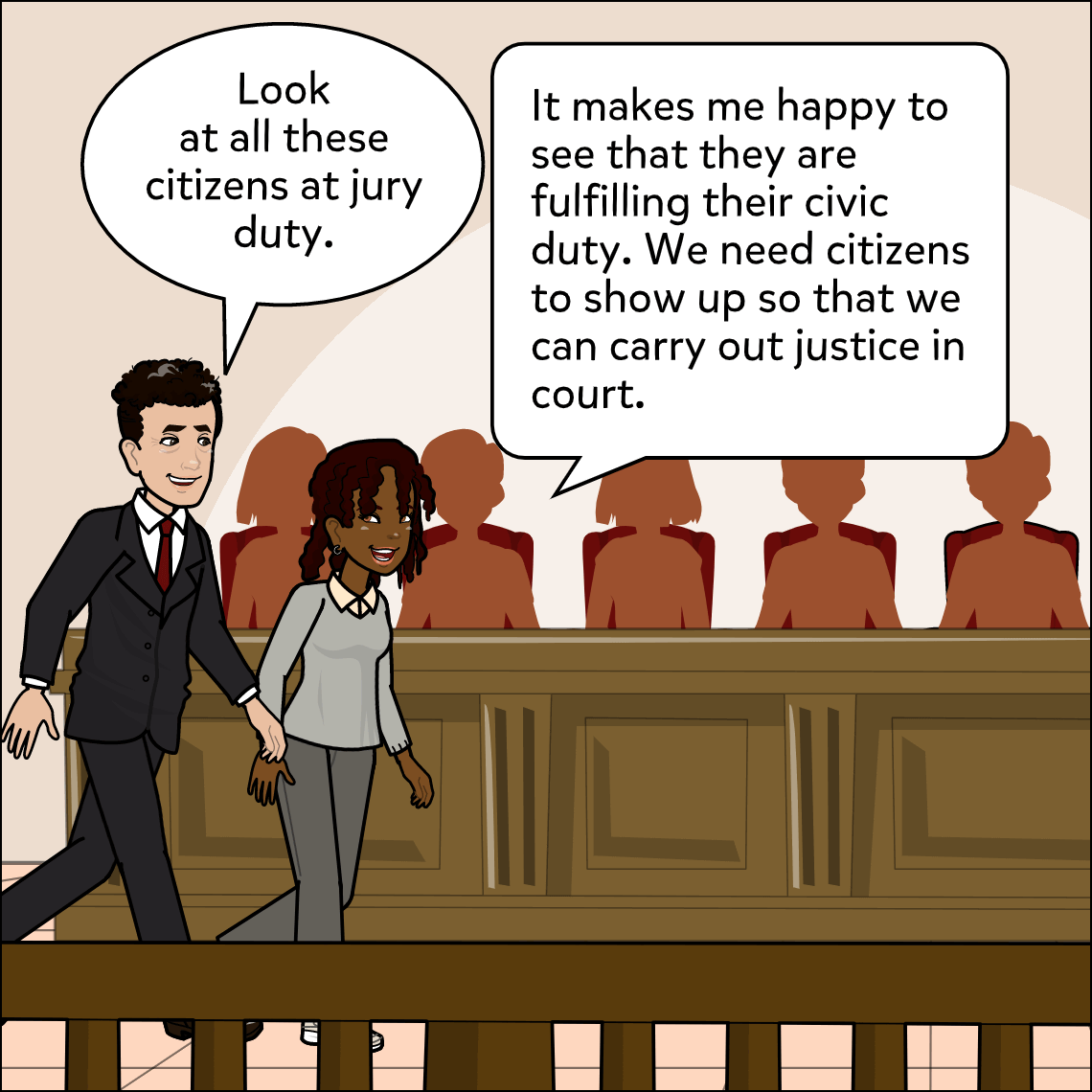
- Using the sample comic as a guide, have students create a comic that explains one role citizens play, such as voters, taxpayers, office holders, or armed forces.
How can teachers wrap up the lesson?
- Have students share their comics with the class or in small groups.
- Emphasize that being an informed, engaged, and responsible citizen is not just a role but a fundamental duty in a democratic society and can actively contribute to building a better community.
How can teachers differentiate this activity?
- Allow students to use the speech-to-text feature.
- Allow students to work in pairs or groups as needed.
- Allow students to use the voiceover feature to read their comics aloud.
Related Resources:
- Comic to print or display: Comic.
- Concept Map
- Community Role Descriptions
- GALE (Open Access through Local Library)
 Middle School
 National Parks
 U.S. Presidential Election
 Suburban
 Urban
Urban
 Rural
Rural
Suggested Story Starters: