At a Glance:
| Grades: | 10, 11, 12, 9 |
|---|---|
| Subject: | World Languages |
| Topic: | Expression, Communication, Culture, Tradition, Presentation |
| Lesson Length: | 45 mins - 1 hour |
Standards / Framework:
What will students learn in this activity?
Students will reflect on their perceptions of the cultures studied.
What should students know before this activity?
Students should be able to express traditions common to their culture and have vocabulary in the target language to evaluate, describe, and express preference.
How can teachers introduce this lesson?
- Ask students:
- “How do we identify the culture or cultures to which we belong?”
- “How can we describe culture and community?”
- “How do our experiences affect the way we see our culture?”
What will students do?
- As a class, have students discuss different cultures to which they belong and compare and contrast different traditions.
- Have students choose one culture to write about.
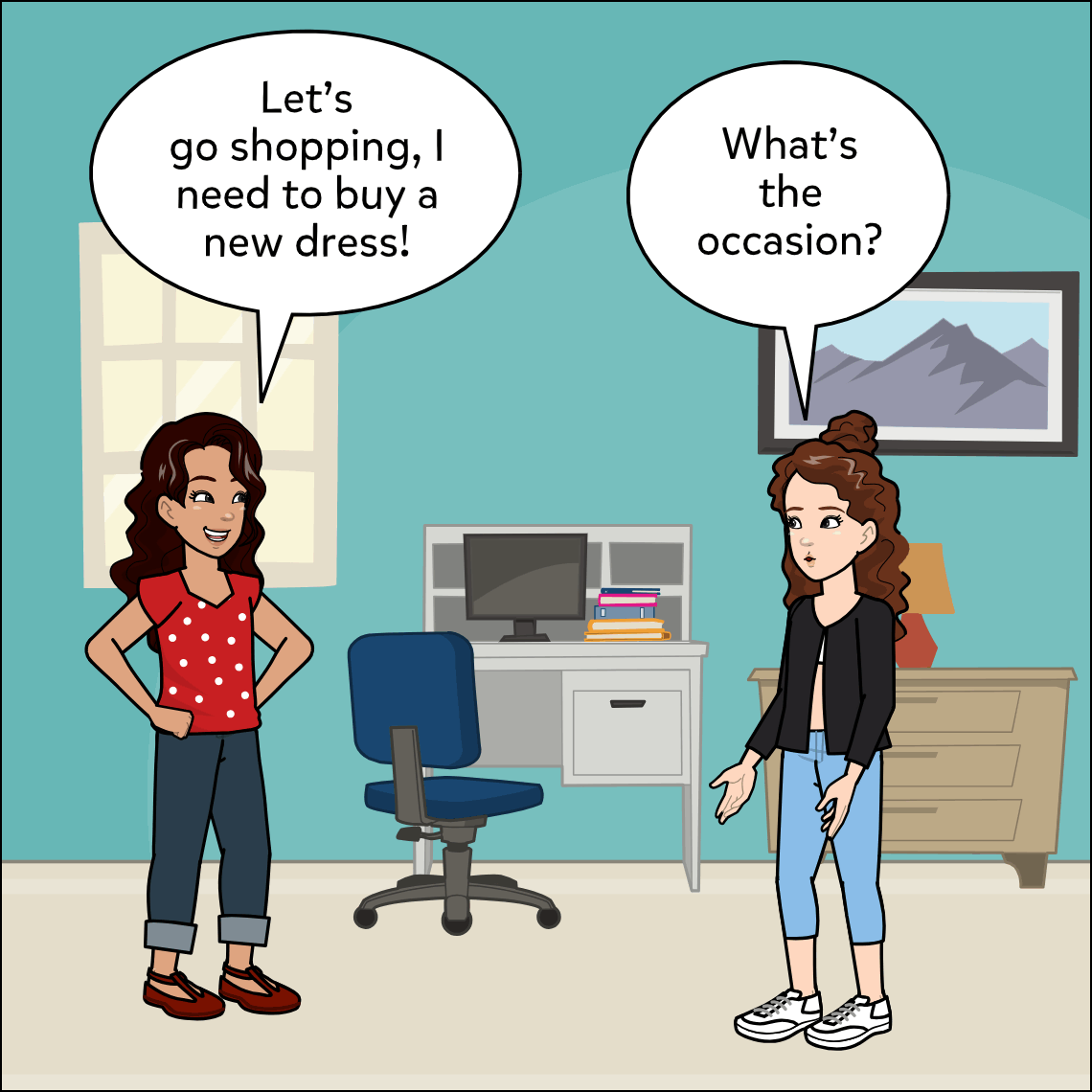
- Using the sample comic as a guide, have students create a comic that describes their perspectives on the culture they chose.
How can teachers wrap up the lesson?
- Have students share their comics with the class or in small groups.
- Have students explain why they chose the perspective featured in their comic.
- Discuss why it’s important to talk about culture and traditions in a different language.
- Emphasize that learning languages also involves learning about and comparing traditions and cultural norms.
How can teachers differentiate this activity?
- Allow students to use the speech-to-text feature.
- Allow students to work in pairs or groups as needed.
- Allow students to use the voiceover feature to read their comics aloud.
- Students may find it helpful to draft their descriptions in English first, then the target language, if they find it difficult to create original sentences in the target language.
- Help students identify and define what “culture” might mean, whether it relates to their family background or the community to which they belong.
- Allow students to go as in-depth or as surface as is appropriate for their comfort level and fluency in the target language.
- Allow students to use digital dictionaries/translators as appropriate for your class policy.
Related Content:
 Native American Heritage
 Filipino-American Heritage
 Hispanic Heritage
 Asian Pacific American Heritage
 Italian-American Heritage
 Shabbat
Suggested Story Starters: