At a Glance:
| Grades: | 6, 7, 8 |
|---|---|
| Subject: | ESL/ELL (English Language Learning) |
| Topic: | Expression, Instruction, Science, Energy |
| Lesson Length: | 15 - 20 min |
Standards / Framework:
What will students learn in this activity?
Students will show two objects interacting and explain the transfer of energy through illustrations and captions.
What should students know before this activity?
Students should be familiar with at least one type of energy.
How can teachers introduce this lesson?
- Ask students:
- “What are some examples of energy?”
- “How can we show what energy is?”
- “Why is it important to be able to communicate about science?”
What will students do?
- As a class, have students discuss forms of energy based on their grade level understanding, e.g., heat, light, kinetic, potential, etc.
- Have students discuss different ways to illustrate energy.
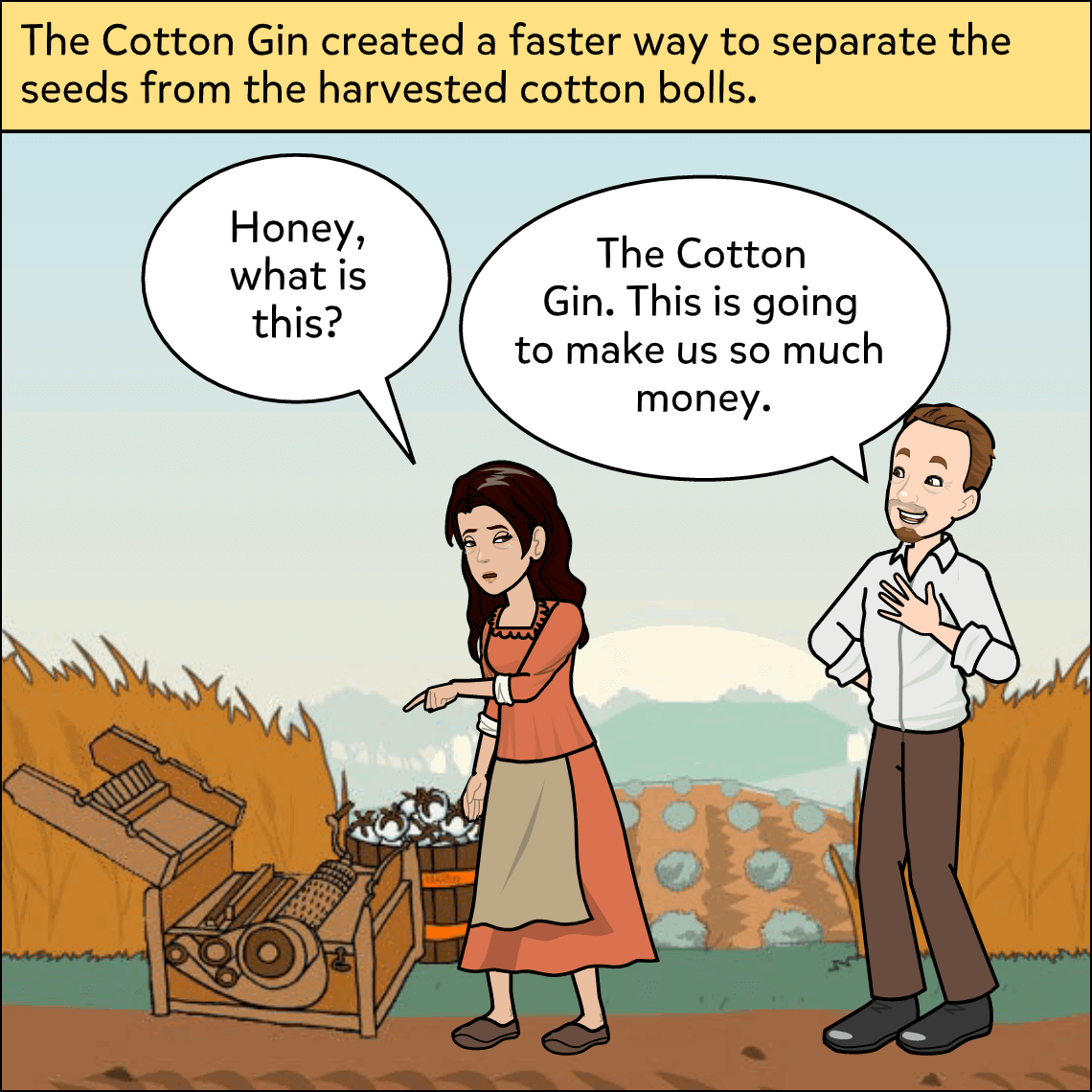
- As a class or in small groups, create a comic that shows energy, so students have an example.
- Using the sample comic as a guide, have students create a comic illustrating a form of energy of their choice.
How can teachers wrap up the lesson?
- Have students share their comics with the class or in small groups.
- Have students explain why they chose that form of energy.
- Discuss why science vocabulary like energy is important.
- Emphasize that understanding science vocabulary helps for future science classes and also for understanding how scientific topics apply to real life.
How can teachers differentiate this activity?
- Allow students to use the speech-to-text feature.
- Allow students to work in pairs or groups as needed.
- Allow students to use the voiceover feature to read their comics aloud.
- Allow students to choose the form of energy they wish to share to allow for grade-level differences.
- Allow students to use digital dictionaries/translators as appropriate for your class policy.
Related Resources:
- Comic to print or display: Comic.
- Main Idea Web
- Concept Map
- iSL Collective Energy Worksheets
 Laboratory
 Energy