At a Glance:
| Grades: | 6, 7, 8 |
|---|---|
| Subject: | ELA (English Language Arts); ESL/ELL (English Language Learning) |
| Topic: | Supporting Claims |
| Lesson Length: | 30 - 45 mins |
Standards / Framework:
What will students learn in this activity?
Students will practice speaking and writing arguments to support claims with clear reasons and relevant evidence.
What should students know before this activity?
This lesson is intended to help students support their ideas with evidence. Ensure students have the opportunity to share their comics aloud for oral language practice.
How can teachers introduce this lesson?
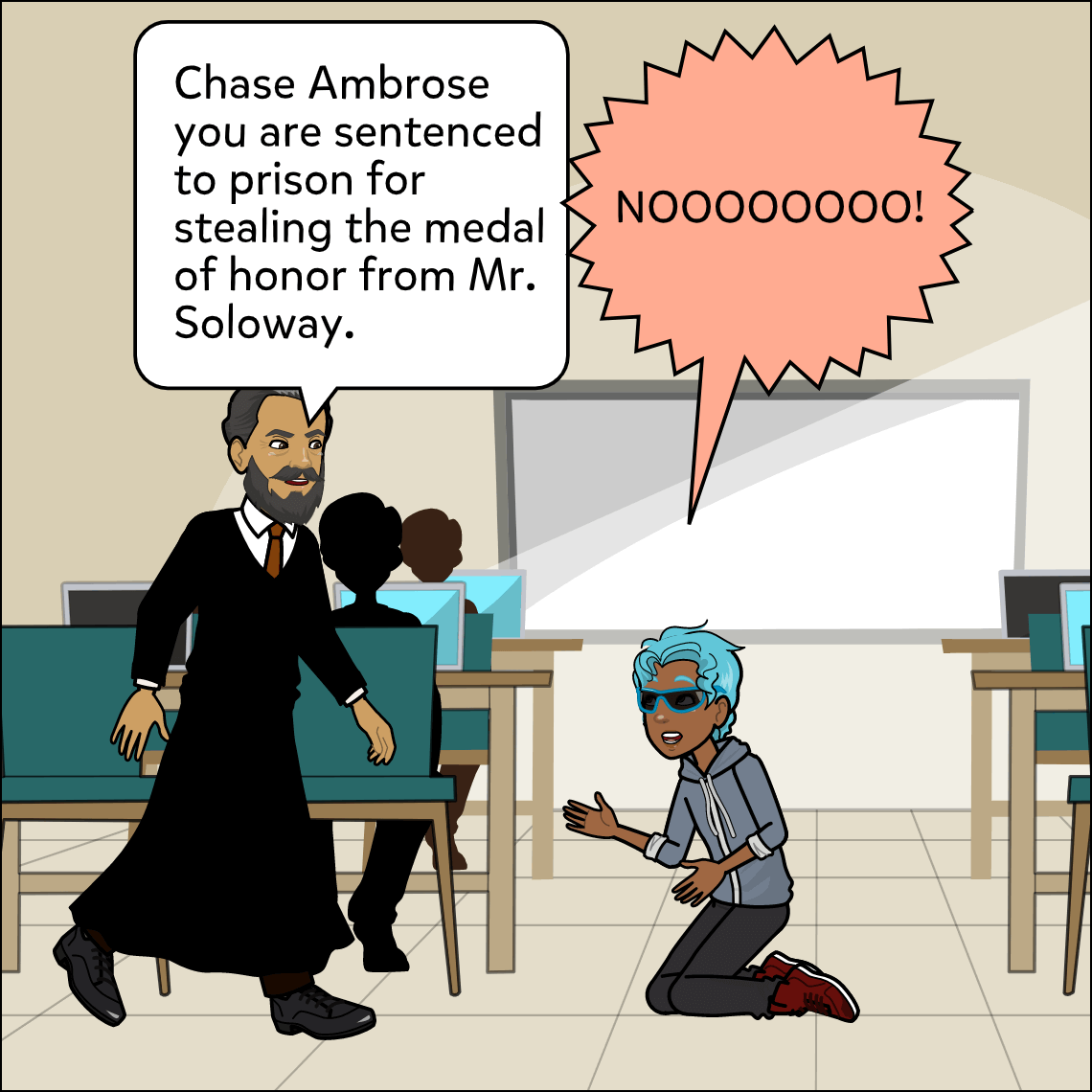
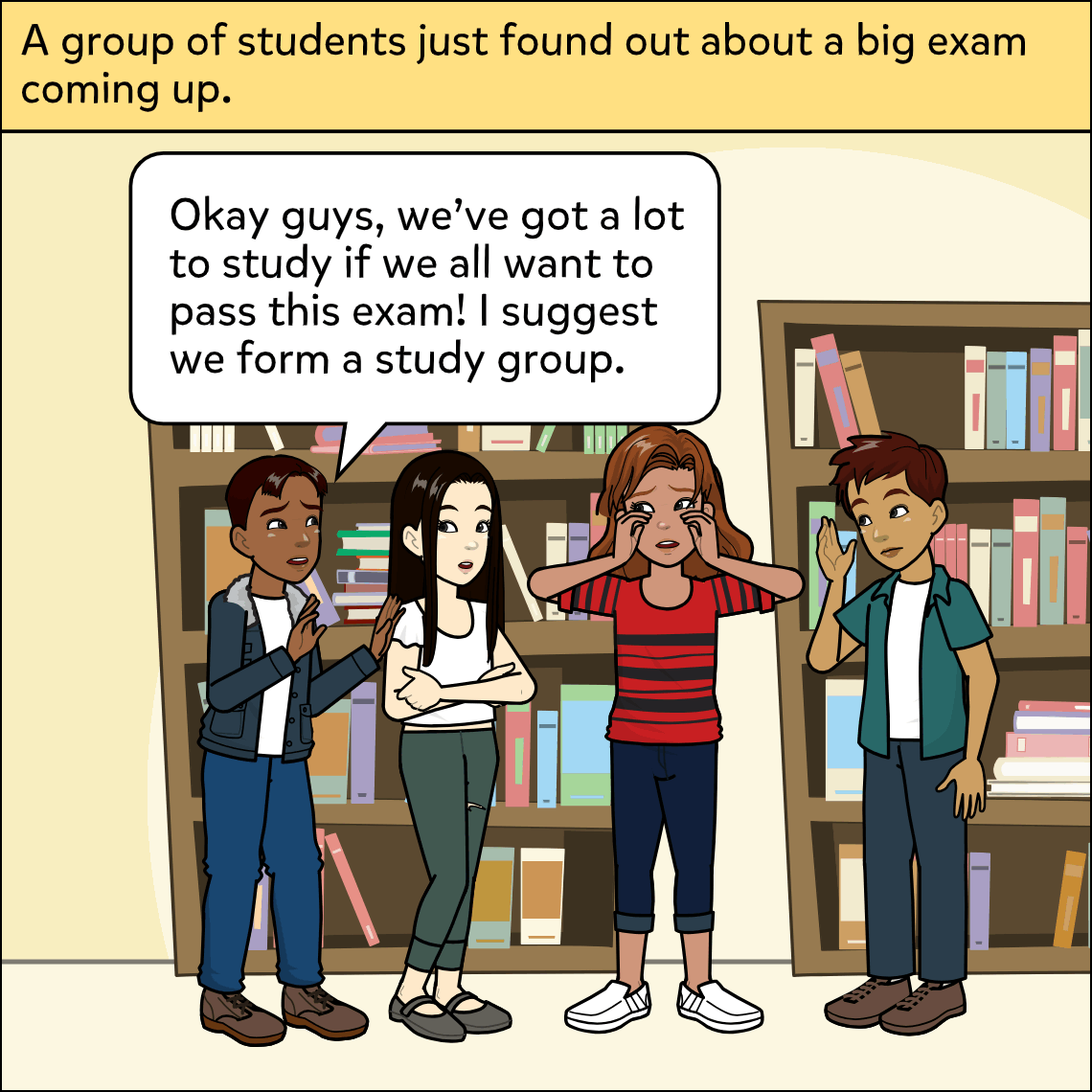
- Read the sample comic as a class.
- Divide the classroom into two sides by placing tape down the center of the room. Label each side with either yes or no.
- Start by asking students a question, e.g., "Should cellphones be allowed at school?" Have students choose their answer by moving to the yes or no side of the room.
- Once students have made their decision, ask students to turn and talk with a partner about why they made the decision they did.
- Have students share ideas aloud. Point out the types of reasons that students use to explain themselves, e.g., personal anecdotes, facts, etc.
- Challenge students to think about how they can further support their claim. Lead students to understand that they need evidence to support their ideas, e.g., facts, examples, anecdotes, statistics, quotes from experts etc.
- Have students work together in small groups to research facts to prove whether cell phones should or should not be allowed in schools. Introduce students to common evidence starters, e.g.,
- "In the article it said…,"
- "According to the text…"
- Repeat activity with one to two more high-interest questions, e.g.,
- "Should students go to school in the summer?"
- "Should teachers give students homework every night?"
What will students do?
- Have students choose a topic based on the questions asked during the hook.
- Using the sample comic as a guide, have students create a comic that states a claim and supports it.
- Comics should include at least three of the following:
- Facts
- Examples
- Anecdote
- Statistics
- Quote from an expert
- Remind students to ensure that their evidence is relevant and helps to prove their argument.
How can teachers wrap up the lesson?
- Have students share their comics with the whole class or in small groups.
- Ask students to provide feedback on whether they used clear reasons and relevant evidence when supporting their claims.
- Were they convinced?
- What other support could have strengthened the claim?
How can teachers differentiate this activity?
- Allow students to use the speech-to-text feature.
- Allow students to work in pairs or groups as needed.
- Provide sentence stems and/or a list of transition words for students as needed.
- Adapt this lesson as needed to meet your students language levels.
- Allow students to use the voiceover feature to read their comics aloud.
 Middle School
 Home